Sharks are among the most fascinating and diverse marine species on the planet. They live in almost every ocean and sea on Earth, and some sharks can even be found in freshwater. Together with rays and chimaeras, sharks belong to a group called elasmobranchs, an ancient family of fish that includes more than 1.200 species.
Sharks have been swimming in our seas for over 400 million years, long before dinosaurs ever existed. Over this span of time, they have evolved into highly intelligent animals. In fact, many sharks have brains as complex as those of mammals, allowing them to process a wide range of information.
Like humans, sharks have five basic senses, but they also have special abilities we do not have. They can detect electrical signals and subtle changes in water pressure, helping them navigate, hunt, and understand their environment in ways that still amaze scientists.
Sharks sit at the top of the food chain as apex predators. By feeding on weaker, sick, or older animals, they help prevent the spread of disease and keep marine populations strong and diverse. Their presence shapes how other species behave, which influences the entire ecosystem — even species they never directly interact with.
Sharks are a vital part of the natural world and support marine biodiversity. When shark populations decline, the effects ripple through the food web, often in unpredictable ways. Entire habitats can change, leading to fewer fish, damaged coral reefs, and less resilient oceans.
The Mediterranean is home to the largest diversity of sharks and rays in the world, hosting 80 different species, from small bottom-dwelling rays to large open-ocean predators - like the great white shark (Carcharodon carcharias), mako (Isurus spp.), and hammerheads (Sphyrna spp.).
However, this rich diversity is under severe threat. Today sharks are among the most threatened species in the Mediterranean.
Sharks grow slowly, mature late, and have low reproductive potential. Despite their strength and long history, sharks are surprisingly fragile. This means their populations cannot recover quickly once they start to decline. Mediterranean shark populations have dropped by more than 97% over the past 20 years.
According to the International Union for Conservation of Nature (IUCN), more than half of Mediterranean shark and ray species are at risk of extinction because of fishing and habitat loss.
Sharks are mostly caught by trawlers, accounting for up to 75% of all catches, 40% of which are discarded at sea as bycatch, often already dead or deadly wounded (1).
Between 2013 and 2022, annual catches of sharks and rays by European Union fishing fleets in the Mediterranean ranged between 3,200 and 5,800 tonnes (6). However, experts believe official statistics capture only part of the reality, as much of the catch is never reported.
Even the most endangered sharks are still frequently caught, and often discarded because they have little market value. For species with slow reproduction rates, these losses are devastating. Sharks have survived for hundreds of millions of years. Whether they survive the next hundred years may depend on the choices we make today.
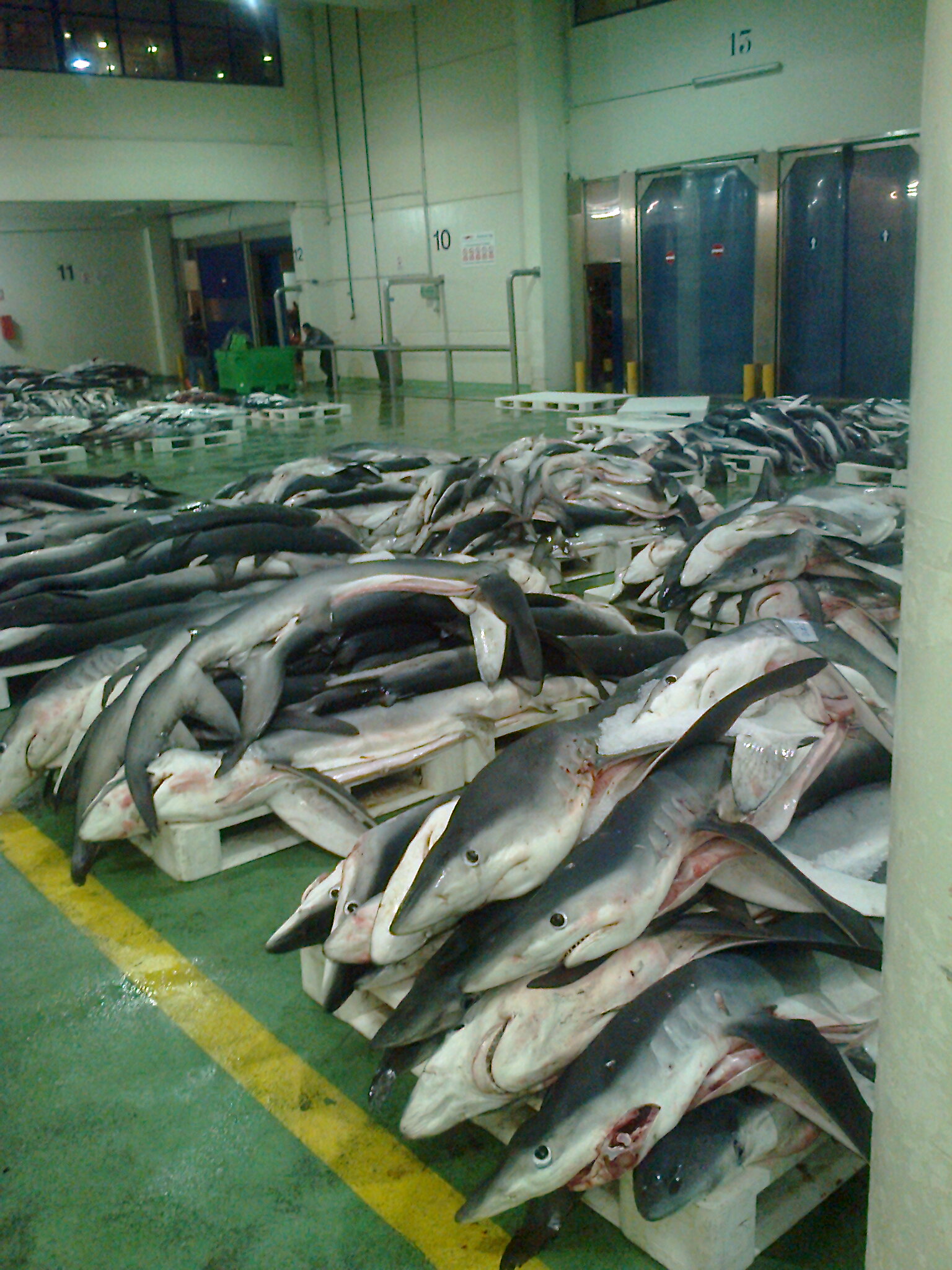
The Mediterranean is home to the largest diversity of sharks and rays in the world, hosting 80 different species, from small bottom-dwelling rays to large open-ocean predators - like the great white shark (Carcharodon carcharias), mako (Isurus spp.), and hammerheads (Sphyrna spp.).
However, this rich diversity is under severe threat. Today sharks are among the most threatened species in the Mediterranean.
Sharks grow slowly, mature late, and have low reproductive potential. Despite their strength and long history, sharks are surprisingly fragile. This means their populations cannot recover quickly once they start to decline. Mediterranean shark populations have dropped by more than 97% over the past 20 years.
According to the International Union for Conservation of Nature (IUCN), more than half of Mediterranean shark and ray species are at risk of extinction because of fishing and habitat loss.
Sharks are mostly caught by trawlers, accounting for up to 75% of all catches, 40% of which are discarded at sea as bycatch, often already dead or deadly wounded (1).
Between 2013 and 2022, annual catches of sharks and rays by European Union fishing fleets in the Mediterranean ranged between 3,200 and 5,800 tonnes (6). However, experts believe official statistics capture only part of the reality, as much of the catch is never reported.
Even the most endangered sharks are still frequently caught, and often discarded because they have little market value. For species with slow reproduction rates, these losses are devastating. Sharks have survived for hundreds of millions of years. Whether they survive the next hundred years may depend on the choices we make today.
A critical hotspot for sharks and rays
The Adriatic shark and ray populations are declining even faster, subject to one of the highest rates of catches in the Mediterranean region, second only to the Western Mediterranean.
While reported catches in the Adriatic increased between 2013 and 2019 (from 652 tons to 1,671 tons), this was followed by a sharp drop in recent years (2), leading experts to conclude that many shark populations are now highly depleted.
The long-term picture is even more concerning. Since 1948, the catch rate of sharks and rays in the Adriatic has fallen by around 94%, and 11 species have no longer been detected (3). This suggests not just a decline, but the possible extinction of entire shark populations.
Figure 1. Northwest Adriatic ISRA
Out of 33 shark species, 26 rays species and 1 chimera of the Adriatic, 21 are now classified as Critically Endangered, 8 Endangered, 10 Vulnerable, 6 Near Threatened.
The Northern Adriatic Sea is a key area for the Thresher shark (Alopias vulpinus) and for juveniles of the Sandbar shark (Carcharhinus plumbeus) (4). Species such as the spiny dogfish (Squalus acanthias), smooth-hounds (Mustelus spp.), and the common eagle ray (Myliobatis aquila) breed and reproduce in the Northwest Adriatic whose waters provide vital habitats for juveniles and populations’ growth (5). Because of its importance, the Northwest Adriatic has been recognised by the IUCN as an Important Shark and Ray Area (ISRA) for its crucial role in the life cycle of these threatened species (Figure 1).
One of the main landing sites and trading centres for sharks in the Adriatic is the Italian port of Chioggia.
Large numbers of threatened species, especially smooth-hounds (Mustelus spp.) and spiny dogfish (Squalus acanthias), are caught by its powerful fishing fleet and sold each year. Despite their vulnerability and relatively low commercial value, for some species landings are increasing to the point that they can hardly be considered by-catch. For example, since 2013, landings of common smooth-hound have increased by more than 340% (Figure 2).
Figure 2 - landings in Chioggia of common smooth-hound and spiny dogfish in 2013-2024 (data elaborated by MedReAct from Clodia database, 2023)
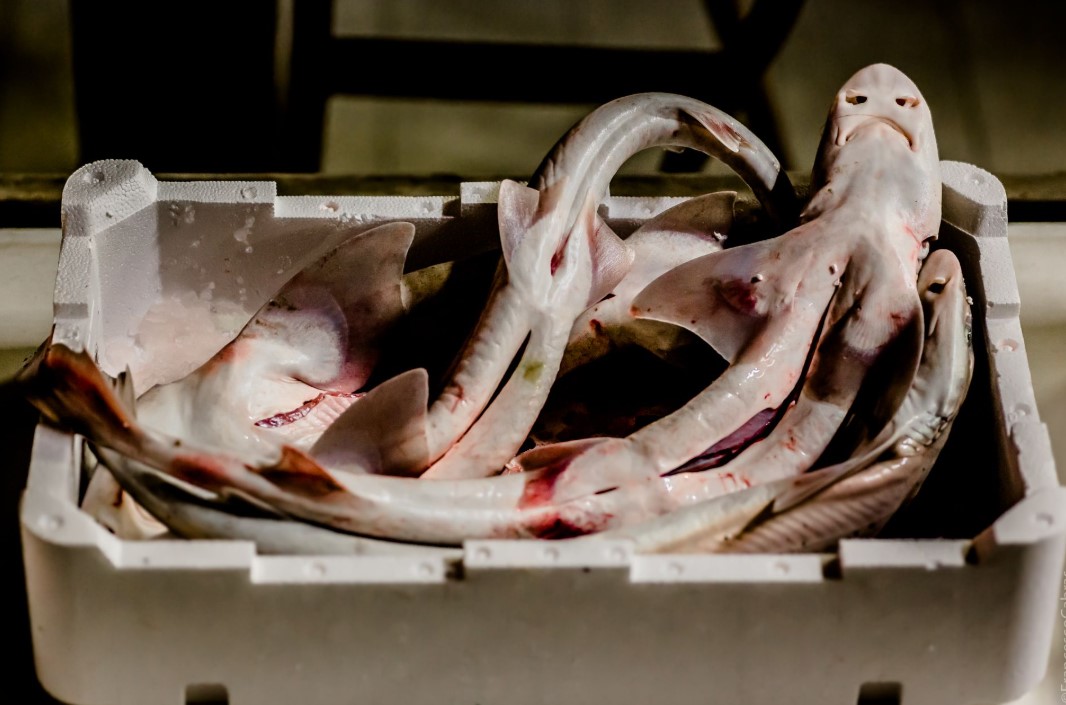
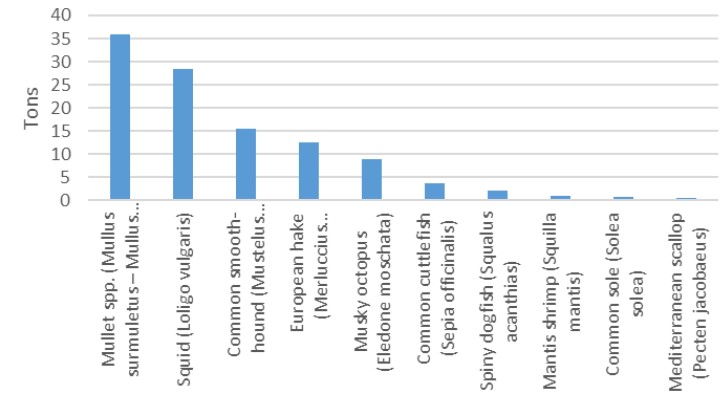
Figure 3. Main catches reported by the fishers’ survey in Istria (MedReAct, 2025)
Despite their declining populations and protected status, sharks and rays are still widely traded and sold in markets.
In Italy, sharks and rays are commonly eaten - especially rays, smooth-hounds, and small-spotted catsharks. Together, these species account for more than 2.200 tonnes traded every year (6). Because shark meat is relatively cheap, it is also often sold under false names, passed off as more valuable fish such as swordfish.
Across Europe, the trade continues to grow. Between 2017 and 2021, more than 155.000 tonnes of sharks were exported from the EU, fuelling a global market that increasingly threatens shark survival worldwide (7). This market is expected to grow by up to 6% over the next decade (8), driven by new consumer trends, restaurant demand, and processed seafood products.
The main suppliers are several European countries, with Spain being one of the largest shark meat traders in the world, while Italy is the third-largest global importer and the leading consumer within the EU (9).
Sharks have shown they can recover — but only if we give them protection and time. Without stronger action by national and regional authorities, the race to fishing and growing market demand may erase that hope before it has a chance to fully unfold.
The angel shark (Squatina squatina) is considered one of the most threatened species in the Mediterranean. Once widespread and abundant, it was pushed to the brink of extinction by decades of overfishing.
In the Adriatic Sea, it was even considered locally extinct after landings collapsed in the 1960s. Recently however, a small number of angel sharks have been detected again. This fragile return suggests that the reduction of fishing pressure and creation of Fisheries Restricted Areas - implemented in the Adriatic since 2017 - can help the recovery of even the most endangered species.
An encouraging development for the future of these vulnerable species has been the establishment of the Jabuka/Pomo Pit Fisheries Restricted Area (FRA) in the Central Adriatic, a large fishing ground placed under protection since 2017. This area hosts key habitats for many depleted species and has become a powerful example of how marine ecosystems can recover once strong conservation measures are applied, even in areas heavily overfished for decades as the Jabuka/Pomo Pit.
Since fishing was restricted, fish populations - including bottom-dwelling sharks - have been increasing at an impressive rate. Even fishers are seeing the benefits: as fish populations rebound inside the protected area, they spread into surrounding waters, leading to higher catches, in a well-known spillover effect.
These results show that reducing fishing pressure and creating protected areas can truly make a difference: measures such as FRAs help vulnerable species like sharks recover, while also strengthening the resilience of marine ecosystems.
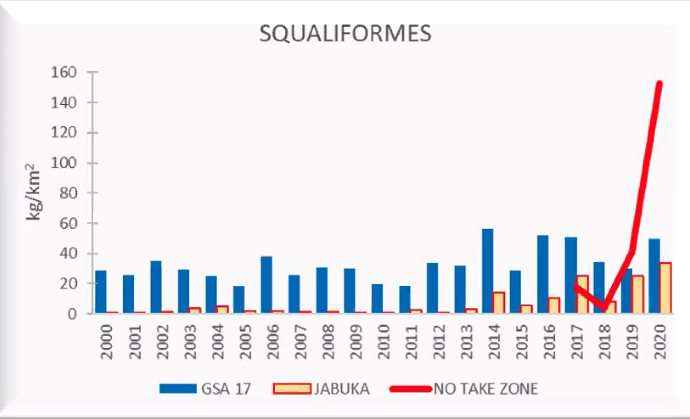
Figure 4 - In 2020 the biomass of squaliform increased to 150kg/km in the Pomo/Jabuka FRA, compared to 50 kg/km2 in the Northern Adriatic. (GFCM SRC-AS, 2021).
Quest’area importantissima per l’accrescimento e la riproduzione di specie commerciali, ospita habitat vulnerabili, come il corallo bamboo e diverse specie di pennatula. L’istituzione di una FRA al largo del Delta dell’Ebro potrebbe contribuire al recupero di stock ittici come il nasello, in una zona in cui i tassi di sovrasfruttamento sono tra i più alti di tutto il Mediterraneo.
la zona centrale del Golfo del Leone è una delle aree più produttive e ricche di biodiversità del Mediterraneo occidentale. Inoltre, i fondali al largo del Golfo del Leone recentemente sono stati identificati come una delle zone prioritarie per la conservazione degli ambienti profondi del Mediterraneo.
Nel 2022 MedReAct ha proposto la creazione di una nuova FRA nel Golfo del Leone, area ricca di ecosistemi e specie vulnerabili come i coralli di profondità, capodogli e squali.

